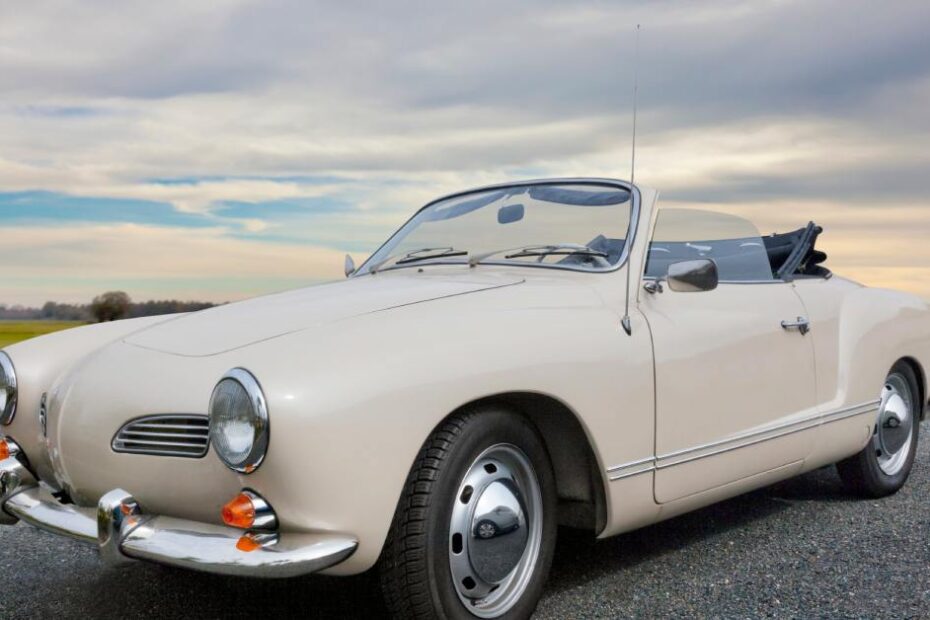
The Karmann Ghia is as a testament to timeless automotive design, blending Italian styling with German engineering. Produced from the mid-1950s to the mid-1970s, it came in two primary forms: the sleek Coupe and the open-air Cabriolet.
While both share the same iconic silhouette and Volkswagen Beetle underpinnings, they possess distinct characteristics that cater to different driver preferences and preservation challenges. We’re taking a closer look at the distinct differences between the Ghia Coupe and Cabriolet.
Structural Rigidity and Reinforcement
The most significant difference between the Coupe and the Cabriolet is their structural design. The Coupe’s fixed steel roof is an integral part of its unibody construction, contributing substantially to the chassis’ overall torsional stiffness. This rigid structure provides a solid, connected feel during driving, minimizing body flex during cornering.
To compensate for the absence of a fixed roof, Volkswagen engineers extensively reinforced the Cabriolet’s chassis. They added strength to the floor pans and welded robust strengthening rails into the sills, running the length of the passenger compartment. These additions were necessary to prevent the body from flexing and to maintain structural integrity, but they also added considerable weight to the vehicle.
Overall Vehicle Weight
The extensive reinforcement required for the Cabriolet results in a noticeable weight difference compared to the Coupe. A typical Karmann Ghia Cabriolet is approximately 150 – 200 pounds heavier than its Coupe counterpart from the same model year.
The added mass affects the car’s handling dynamics and power-to-weight ratio. While the difference may not be dramatic, drivers may perceive the Coupe as slightly more nimble and responsive, particularly with the stock air-cooled engine.
Convertible Top Mechanism
The Cabriolet’s defining feature is its manually operated convertible top. This complex assembly consists of a folding metal frame, a multi-layered fabric top, and a glass rear window. The top features padding for insulation and a headliner for a finished interior appearance. This intricate mechanism requires regular maintenance to ensure smooth operation and proper weather sealing.
Over time, the fabric can wear, and the folding frame may require adjustment. In contrast, the Coupe’s simple, fixed roof eliminates these concerns entirely.
Rear Window Design
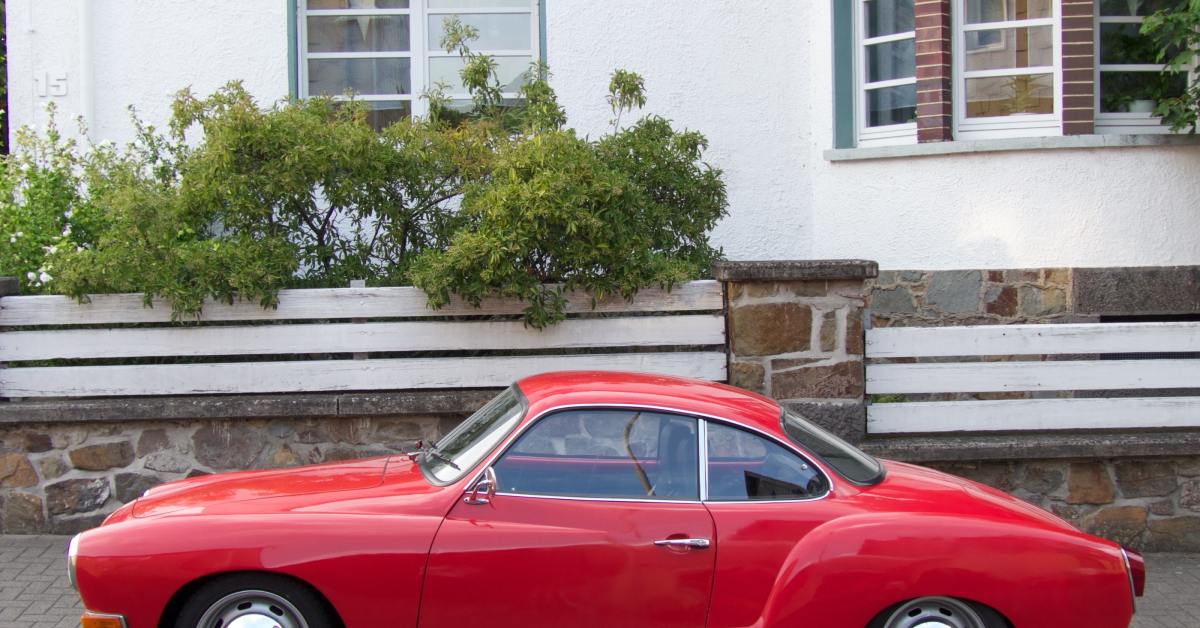
The rear window design starkly separates the two models. The Coupe features a large, wraparound glass rear window that enhances visibility and contributes to its iconic, airy greenhouse. This design remained a consistent feature throughout its production run.
The Cabriolet, however, uses a smaller, flat glass rear window set within the folding top. Early models featured a plastic rear window, but this was later upgraded to glass to improve clarity and durability. The smaller window size inherently limits rearward visibility compared to the panoramic view offered by the Coupe.
Interior Cabin Differences
The differences continue as we move inside the cabin. The Cabriolet’s design accommodates the folding top mechanism, which results in a slightly narrower rear seat. The area behind the rear seat, where the top stows when folded, is also unique to the convertible model.
Furthermore, the sun visors in a Cabriolet differ from those in a Coupe. They are specially designed with a break-away pivot mount. This safety feature allows the visors to detach if impacted during a collision, a requirement for convertibles of the era. The Coupe uses a standard, fixed-pivot visor.
Body Seals and Weatherproofing
Achieving a weathertight seal in a convertible is always a challenge. The Cabriolet uses a complex system of rubber seals around the doors, windows, and the convertible top frame to keep wind and water out. These seals are critical for a comfortable driving experience and require regular inspection and replacement to prevent leaks.
The Coupe has a much simpler sealing system for its doors and windows, making it inherently easier to keep weatherproof. Sourcing the correct Karmann Ghia parts, especially the intricate seal kits for a Cabriolet, is vital during a restoration project.
Production Numbers and Rarity
Volkswagen produced significantly fewer Cabriolets than Coupes. Throughout the entire production run of the Type 14 Karmann Ghia, they made approximately 364,000 Coupes, whereas only about 81,000 Cabriolets rolled off the assembly line. This four-to-one production ratio makes the Cabriolet the rarer of the two models today, which often translates to higher market values and greater exclusivity.
Market Value and Collectibility
Due to their relative scarcity and the enduring appeal of open-top motoring, Cabriolet models typically command a higher price than Coupes in comparable condition. The premium for a Cabriolet can be substantial, often 30 – 50 percent or more. Both models are highly collectible, but the Cabriolet’s lower production numbers and classic convertible charm give it an edge in the collector market.
Restoration Complexity and Cost
Restoring a Cabriolet is generally more complex and expensive than restoring a Coupe. The convertible top mechanism, with its numerous moving parts and fabric components, are costly and labor-intensive to refurbish.
Additionally, the specific reinforcements in the Cabriolet’s chassis are prone to rust, and repairing them properly requires specialized skills. Finding a rust-free Cabriolet is more challenging, and addressing corrosion in these critical structural areas adds to the restoration budget.
Driving Experience and Feel
While both models offer a distinct vintage driving experience, subtle differences emerge on the road. The Coupe’s lighter weight and stiffer chassis can make it feel slightly more agile and responsive in corners. The enclosed cabin also provides a quieter ride with less wind noise.
In contrast, the Cabriolet delivers an unparalleled open-air experience. With the top down, the sounds and smells of the road become part of the drive, creating a sensory connection that the Coupe cannot replicate. While it may exhibit slightly more body flex, for many drivers, this is a small trade-off for the joy of top-down cruising.
Choosing Your Classic
Deciding between a Karmann Ghia Coupe and a Cabriolet ultimately comes down to personal preference, priorities, and which differences resonate best with you. The Coupe offers a purer expression of the original design, with a rigid body, better visibility, and simpler maintenance. It’s a practical and stylish classic well-suited for regular driving. The Cabriolet provides the quintessential convertible experience, combining iconic style with the thrill of open-air motoring.