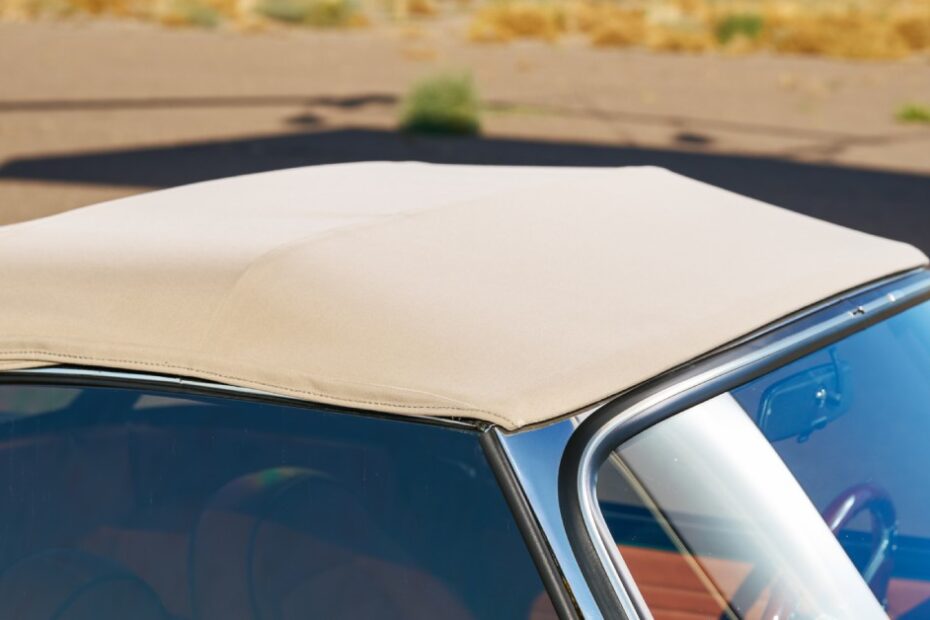
Restoring a VW convertible top rewards you with a car you can drive more often and enjoy longer. However, restoring any classic car comes with the chance of problems to troubleshoot.
Most issues come from fit, tension, seals, and aging materials, so you can solve many problems with patient inspection and correct parts. Here is a guide to these common VW convertible top problems and how to fix them if you run into them during your restoration.
Problem 1: Water Leaks at the Windshield Header
Most header leaks start with a hardened front seal or poor clamp pressure at the latch points. You fix leaks faster when you identify the leak path, not just the wet spot.
Close the top and run a thin strip of paper between the seal and the windshield frame along the full width. If the paper slides out easily in one area, you need more clamp force, a better seal, or a frame alignment correction.
Fix: Seal Fit and Latch Adjustment
Replace the header seal if it shows cracks, flattening, or glossy hard rubber. Use a seal that matches your model year because small profile differences change how the top compresses.
Adjust the latches so they pull the header down evenly without overloading the hooks. If the hooks sit too far forward or back, you should correct the latch geometry instead of forcing the handles.
Problem 2: Water Leaks at Side Windows and Quarter Windows
Side leaks usually come from misaligned glass, worn window scrapers, or tired vertical seals. A top can fit well and still leak if the windows do not meet the seals cleanly.
Look at the glass-to-seal contact line from inside the car with a flashlight. You want a continuous, even contact line with no gaps at the front upper corner or along the quarter window edge.
Fix: Glass Position First, Seals Second
Set the door glass and quarter glass alignment before you replace seals. If you install new rubber first, you may repeat the problem and damage fresh material.
After you align the glass, replace worn scrapers and guides so the glass stops wobbling. Then install the correct side seals and confirm the glass compresses the rubber without bending the frame.
Problem 3: Flapping, Buffeting, and Excess Wind Noise
When a VW top flaps at speed, tension or bow support usually falls short. The fabric may also sit too loose because the pads compress or the rear cable loses tension.
Inspect the fabric surface between bows with the top latched and the windows up. If you see large soft spans and ripples, the top lacks support and will wear at contact points.
Fix: Cable Tension, Pad Condition, and Bow Profile
Check the side tension cables for fraying, kinks, or loose adjustment. Proper cable tension pulls the edges down and keeps the top from ballooning.
Inspect the pads for thinning and uneven compression over the bows. If the pads fail, the fabric drapes into low spots and creates flutter and premature crease lines.
Problem 4: Rear Window Fogging, Yellowing, or Cracking
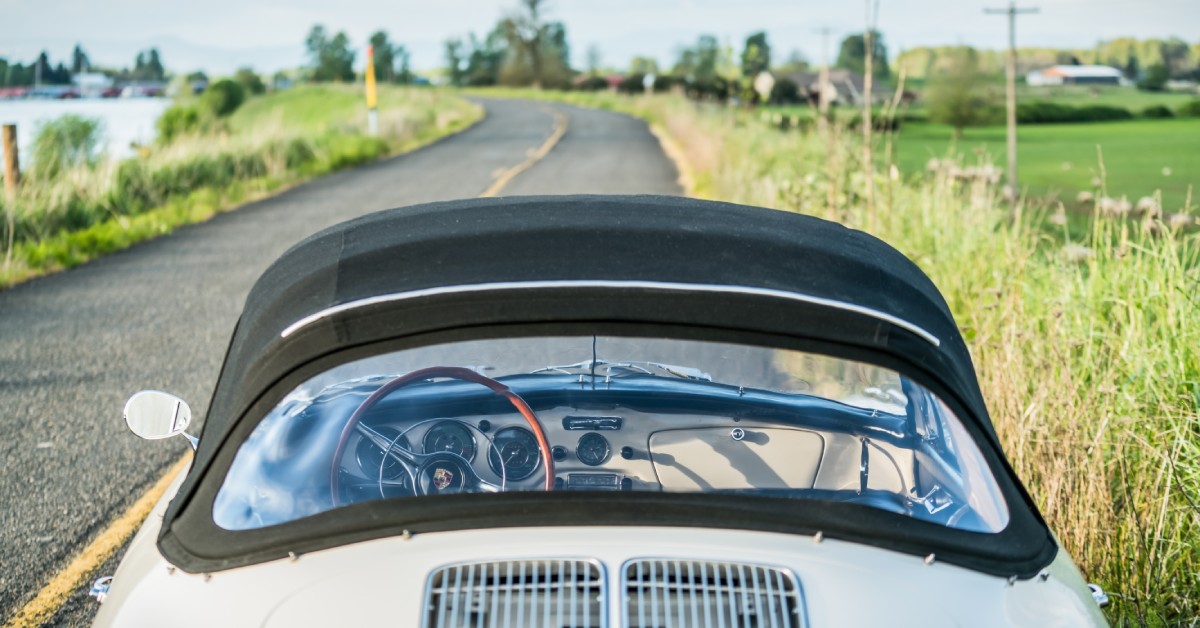
Plastic rear windows age faster than most owners expect, especially when they fold cold. Clouding and yellowing reduce visibility, and creases turn into cracks over time. Clean the window with products made for soft plastic and avoid harsh household cleaners.
Fix: Replace the Window or the Entire Skin When Needed
If the window shows deep cracks, replace it before it fails on the road. A new window also helps the top lay flatter because the old window often shrinks and pulls the fabric.
If the fabric shows shrinking, seam stress, or edge wear, replace the full top skin instead of only the window. A balanced installation keeps tension even and protects your stitching.
Problem 5: Binding Frame, Uneven Gaps, or Wrinkles That Never Improve
Many beginners pull harder on the fabric and create new wrinkles and torn seams. Open the top halfway and watch the hinge motion on both sides. If one side leads or lags, you likely have bent arms, worn pivot bushings, or mounting points that shifted.
Fix: Square the Frame Before You Touch Fabric Tension
Confirm that the frame mounts sit tight to the body and that the pivot points move freely. Lubricate pivots lightly and replace worn bushings so both sides track together. Inspect the wood bow structure on classic VW applications because bow profile controls the fabric line.
Problem 6: Torn Seams, Frayed Stitching, and Edge Wear
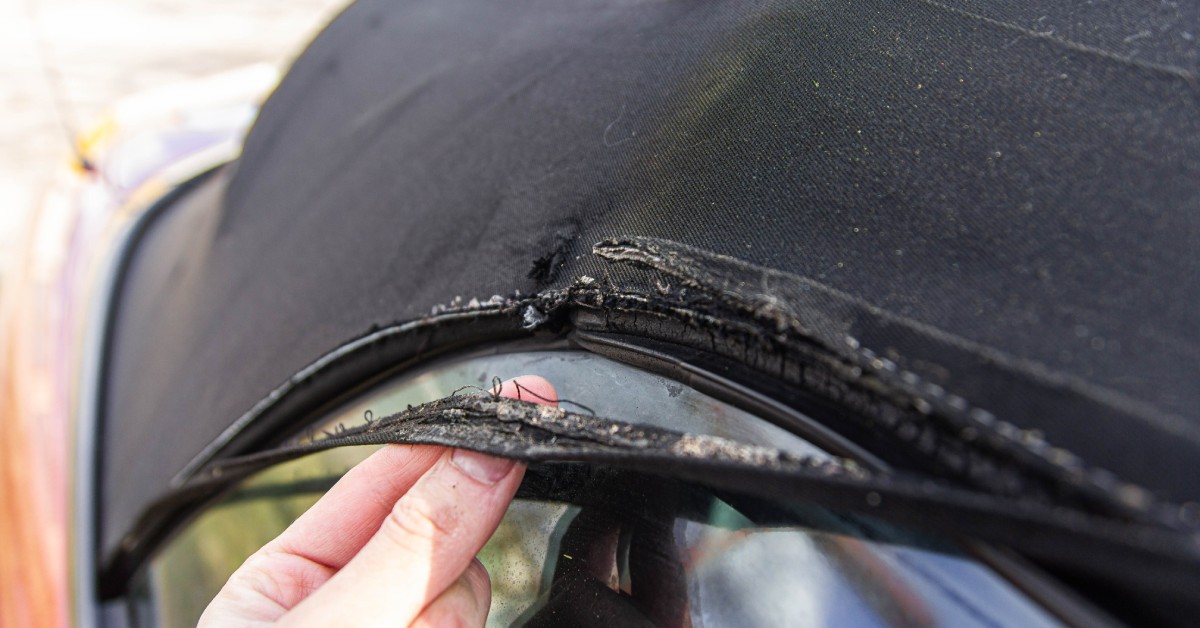
Seams fail when the top pulls unevenly, rubs on a sharp frame edge, or runs too tight at one anchor point. Look for shiny rub marks on the underside of the fabric and on the frame pads. Those marks show the contact points that cut threads and wear the top material.
Fix: Correct Chafe Points and Rebuild the Wear Stack
Smooth any sharp edges on the frame and confirm that webbing and pads sit between the frame and the fabric. Replace worn pads and binding strips so the fabric does not ride directly on metal.
Problem 7: Latch Problems, Hook Wear, and Header Rattle
Old latches often loosen and start rattling, or the hook geometry changes from wear. Operate both latches slowly and feel for a clean cam action. Any gritty feel, slipping, or uneven pull tells you that the latch needs service, not more force.
Fix: Rebuild or Replace Latch Components
Tighten the latch mounting points and confirm solid metal under the fasteners. Replace worn hooks and hardware so the latch pulls straight down and does not twist. After you restore latch integrity, recheck seal compression with the paper test.
Problem 8: Rear Seal Leaks and Water in the Package Area
Rear leaks usually come from a tired body seal, incorrect top-to-body tension, or poor contact at the rear corners. Water can enter at the rear seam and travel forward under the headliner.
Inspect the rear seal for flattening and splits, then check how the top fabric meets the rear edge. If the fabric pulls too far forward, it may lift the rear edge and create a channel for water.
Fix: Restore Rear Contact and Confirm Drain Paths
Replace the rear seal with the correct profile and make sure it seats fully along the body lip. Then set rear tension so the fabric lays down without lifting at the corners.
Clear any drain paths and keep the rear area clean so water exits instead of pooling. Good seals plus clean drains prevent musty smells and hidden rust.
Choosing Parts That Fit and Last
Convertible tops punish wrong-fit parts, especially seals, cables, pads, and bows. When you buy vintage Volkswagen parts, prioritize correct year fitment and proven materials over the cheapest option.
Match your parts to your exact model and top style because VW changed details across years and platforms. A small mismatch can create a big leak or a stubborn wrinkle.
A quiet, dry VW convertible top comes from correct alignment, correct tension, and correct materials working together. With patience and the right vintage Volkswagen parts, you can solve the most common top problems and protect your restoration investment. M&T Manufacturing’s focus on VW restoration parts and long experience in the convertible top space helps you find parts that prioritize fit, durability, and correct construction.