
The Volkswagen Type 3 holds a unique place in automotive history, bridging the gap between the classic Beetle and the more modern Type 4. Produced from 1961 to 1973, it offered more space and comfort while retaining the familiar air-cooled, rear-engine layout. A key distinction in its production run was the evolution of its fuel delivery system, moving from traditional carburetors to electronic fuel injection.
This transition marked a significant step for Volkswagen, introducing new levels of efficiency and performance. Both systems have their own distinct characteristics, advantages, and drawbacks. Understandingthe differences between the carburetor and fuel injection systems is essential for anyType 3 owner, whether they are focused on originality, performance, or daily drivability. This guide compares these two fuel systems to help you decide which is better suited for your classic VW.
The Carburetor System
Carburetors were the standard fuel delivery method for most of the Type 3’s production years. The system is entirely mechanical, relying on engine vacuum to draw a mixture of air and fuel into the combustion chambers. It is a time-tested technology known for its straightforward design.
How Carburetors Work in Type 3 Engines
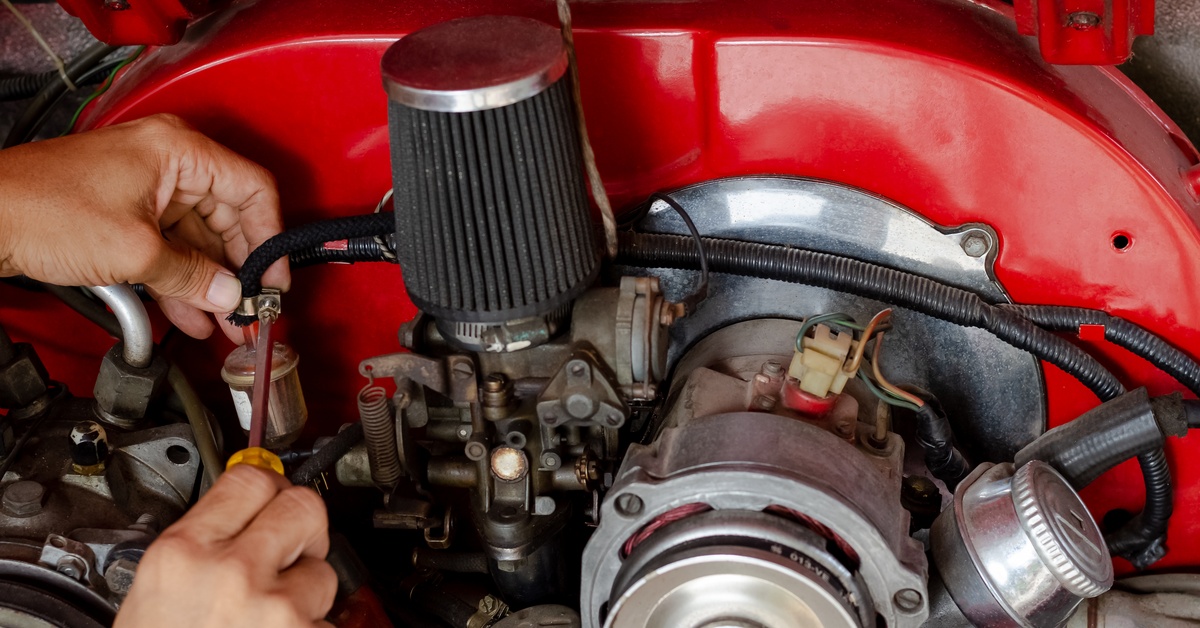
The carburetor in a VW Type 3 mixes air and fuel before the mixture enters the engine’s intake manifold. As the engine runs, it creates a vacuum that pulls air through the carburetor’s main bore, known as the venturi. This airflow creates a low-pressure area that siphons fuel from a small reservoir called the float bowl, atomizing it into the airstream for combustion.
Advantages of the Carburetor
The primary advantage of a carburetor system is its simplicity. With fewer components and no electronic parts, it is relatively easy to understand and diagnose. This mechanical nature also makes it easier for the average enthusiast to perform maintenance and adjustments without specialized tools.
Cost-effectiveness is another significant benefit. Carburetors and their related components are generally less expensive to manufacture, repair, and replace. For owners focused on budget-friendly restoration or maintenance, this makes the carburetor an attractive option.
Disadvantages of the Carburetor
Despite its simplicity, the carburetor has several drawbacks. It can deliver an inconsistent fuel-to-air mixture, especially during cold starts or sudden changes in throttle. This can lead to less efficient combustion and reduced performance.
Carburetors are also highly sensitive to changes in altitude. As atmospheric pressure decreases at higher elevations, the denser fuel mixture can cause the engine to run rich, impacting performance and fuel economy. Additionally, carburetors produce higher emissions compared to more modern systems, making them less environmentally friendly.
The Fuel Injection System
In 1968, Volkswagen introduced the Bosch D-Jetronic electronic fuel injection (EFI) system as an option for the Type 3. This was a pioneering move, making the Type 3 one of the first mass-produced cars to feature electronic fuel injection. The system uses sensors and a computer to manage fuel delivery with greater precision.
How Fuel Injection Works in Type 3 Engines
The D-Jetronic system replaces the mechanical carburetor with a set of electronic components. It uses an engine control unit (ECU), manifold absolute pressure (MAP) sensor, and throttle position sensor to calculate the exact amount of fuel needed. Electronic injectors then spray a fine mist of fuel directly into the intake ports for more efficient combustion.
Advantages of Fuel Injection
The precision of the fuel injection system offers several key benefits. It delivers a consistent and optimized air-fuel mixture under all operating conditions, resulting in improved fuel efficiency. This precise control also leads to better engine performance, with smoother acceleration and more reliable power output.
Fuel injection systems produce significantly lower emissions because the ECU constantly adjusts the fuel mixture for optimal combustion. This makes EFI-equipped Type 3s cleaner-running vehicles. The system also adapts automatically to changes in altitude, maintaining consistent performance regardless of elevation.
Disadvantages of Fuel Injection
The main disadvantage of the fuel injection system is its complexity. The inclusion of electronic sensors, wiring, and an ECU means there are more components that can potentially fail. Diagnosing and repairing issues often requires specialized knowledge and tools that go beyond basic mechanical skills.
This complexity also translates to higher costs. Replacement parts for the D-Jetronic system, such as the ECU or fuel injectors, are more expensive and can be harder to find than carburetor components. Maintenance can also be more costly if it requires a specialist familiar with vintage electronic systems.
Performance Comparison
When comparing the two systems, it is important to look at several key performance metrics. Fuel efficiency is typically better in fuel-injected models, as the precise fuel delivery minimizes waste. In terms of power, while the difference may not be dramatic, fuel-injected engines often provide a more responsive and consistent output across the range.
Reliability can be a point of debate. A well-maintained carburetor is reliable due to its simple design, but it requires periodic adjustments. A fuel injection system is generally more reliable in day-to-day operation and requires less frequent tuning, but a failure of an electronic component can be more difficult and costly to resolve. Maintenance costs are generally lower for carburetors, while EFI systems may demand a higher budget for specialized service.
Conversion Considerations
Many Type 3 owners consider converting their carbureted engine to fuel injection. This can provide the benefits of improved efficiency, performance, and lower emissions. However, the process is complex and can be expensive, requiring the EFI components and potential modifications to the fuel tank and lines.
Conversely, some owners of fuel-injected models choose to convert to a carburetor system. This is often done to simplify maintenance, reduce repair costs, or if original EFI components are no longer available. While this may sacrifice some efficiency, it can make the vehicle easier for a home mechanic to maintain.
Find VW Type 3 Car Parts at M & T Manufacturing
Whether you restore a carbureted classic or maintain an original fuel-injected model, finding the right parts is crucial. M & T Manufacturing offers a wide selection of high-quality components for your VW Type 3.
From carburetor rebuild kits to fuel system parts, our inventory is designed to help you keep your classic Volkswagen running smoothly. Browse our selection of VW Type 3 restoration parts to find the exact components you need for your project.
Your Path to Classic VW Performance
Both the carburetor and fuel injection systems have their place in the world of the VW Type 3. The carburetor represents simplicity and ease of maintenance, making it a favorite among traditionalists and budget-conscious restorers. The fuel injection system, on the other hand, offers superior efficiency, performance, and adaptability, appealing to those who prioritize modern reliability in their classic car.
Ultimately, the choice between them depends on your personal goals and priorities as a Type 3 owner. Whether you prefer the mechanical charm of a carburetor or the electronic precision of fuel injection, understanding the characteristics of each system will help you enjoy your classic VW to the fullest.